Korean Bibimbap

Korean Bibimbap

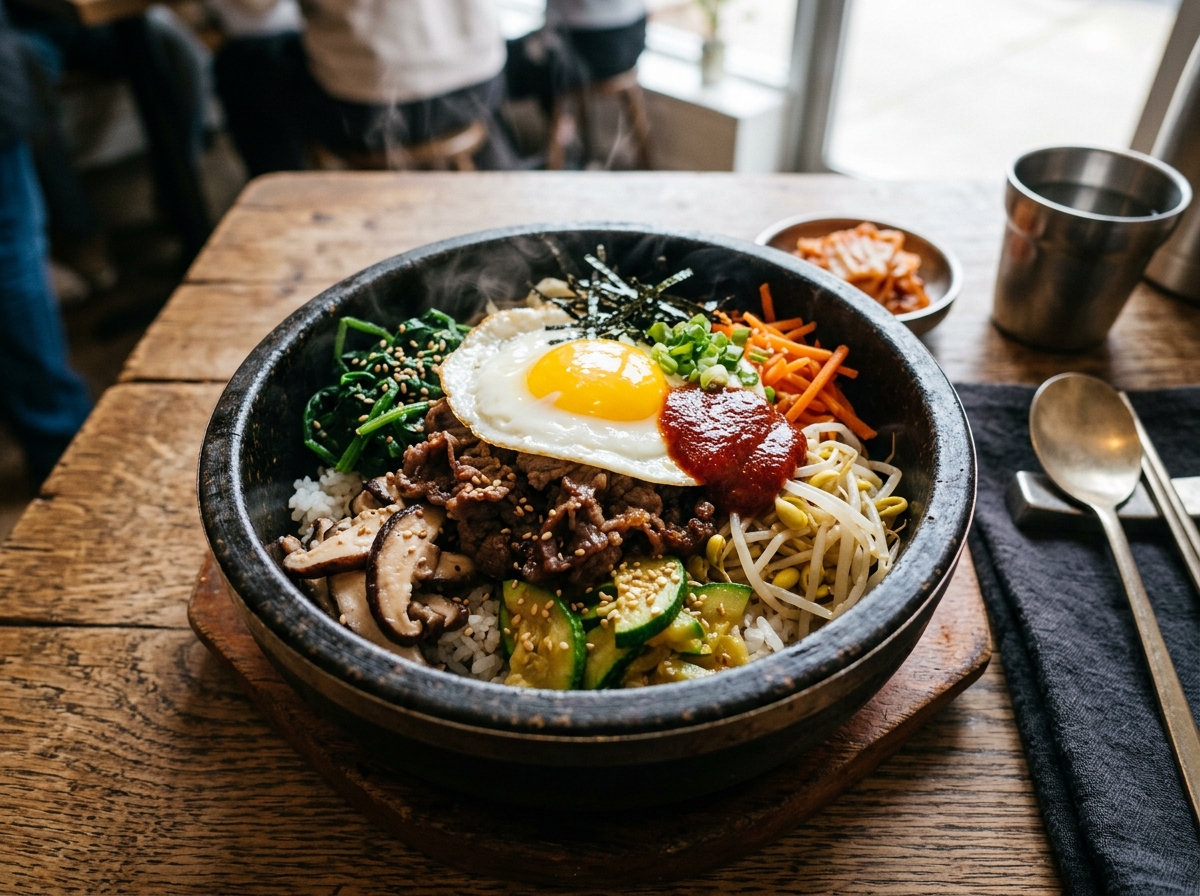
Cultural Context: Bibimbap means "mixed rice" in Korean, and it's exactly that — a bowl of warm rice topped with an array of seasoned vegetables, protein, a fried egg, and fiery gochujang sauce. The joy is in the mixing. Every component is prepared separately, then combined at the table. It's a cele

Time: 1 hour (much of it is simultaneous prep)  ·  Yield: 4 servings

Ingredients

  • *Rice base:**
  • 2 cups short-grain white rice, cooked (about 4 cups cooked)
  • 1 tablespoon toasted sesame oil (for the bowls)
  • *Protein (choose one):**
  • 12 oz (340 g) beef sirloin or ribeye, sliced very thin against the grain
  • *Marinade:* 2 tablespoons soy sauce, 1 tablespoon sesame oil, 2 teaspoons sugar, 2 cloves minced garlic, 1 teaspoon grated ginger, ½ teaspoon black pepper
  • *Vegetable toppings (namul — prepare all):**
  • 8 oz (225 g) fresh spinach
  • 2 medium carrots, julienned
  • 1 medium zucchini, julienned
  • 8 oz (225 g) bean sprouts
  • 4 oz (115 g) shiitake mushrooms, stemmed and sliced
  • 1 tablespoon soy sauce (for each vegetable)
  • 2 teaspoons toasted sesame oil (for each vegetable)
  • Toasted sesame seeds
  • *To finish:**
  • 4 eggs
  • 4 tablespoons gochujang (Korean chili paste)
  • 1 tablespoon sesame oil
  • 1 tablespoon rice vinegar
  • 1 teaspoon sugar
  • Vegetable oil for frying
  • Kimchi, for serving (optional but encouraged)

Method

  1. **Marinate the beef.** Combine all marinade ingredients. Toss the sliced beef in the marinade and set aside while you prep the vegetables (at least 20 minutes).
  2. **Season each vegetable separately.** This is the heart of bibimbap — each component gets its own treatment:
  3. **Spinach:** Blanch in boiling water for 30 seconds. Drain, squeeze out all water, and chop roughly. Toss with 1 teaspoon soy sauce, 1 teaspoon sesame oil, and a pinch of sesame seeds.
  4. **Carrots:** Sauté in 1 teaspoon oil over medium-high heat for 2 minutes until just tender. Season with a pinch of salt.
  5. **Zucchini:** Sprinkle with ½ teaspoon salt and let sit 10 minutes. Squeeze out water. Sauté in 1 teaspoon oil for 2 minutes. Season with a drop of sesame oil.
  6. **Bean sprouts:** Blanch for 1 minute, drain well. Toss with 1 teaspoon soy sauce and 1 teaspoon sesame oil.
  7. **Mushrooms:** Sauté in 1 teaspoon oil over high heat until golden, about 3 minutes. Season with 1 teaspoon soy sauce.
  8. **Cook the beef.** Heat a skillet or grill pan over high heat with a slick of oil. Sear the beef in a single layer (work in batches) for 1-2 minutes per side. You want a good char. Set aside.
  9. **Make the bibimbap sauce.** Whisk together gochujang, sesame oil, rice vinegar, and sugar. Add 1 tablespoon warm water to thin it to a drizzling consistency.
  10. **Fry the eggs.** In a non-stick pan, fry 4 eggs sunny-side up in a little oil until the whites are set but the yolks are still runny. This is essential — the yolk becomes part of the sauce when you mix.
  11. **Assemble.** Divide hot rice among 4 bowls (brush bowls with sesame oil first for a nice touch). Arrange the vegetables, beef, and egg in sections on top of the rice — like a color wheel, with the egg in the center. Drizzle with bibimbap sauce. Serve with extra gochujang and kimchi on the side.
  12. **Mix everything together** right before eating. That's the whole point.
  13. *Storage:** Individual components store well separately in the fridge for up to 3 days. Assemble fresh. For meal prep, prepare all the namul and protein, store in separate containers, and build bowls throughout the week.

Get the Full Book

Whole Kitchen Collection
All 4 seasonal cookbooks — Spring, Summer, Fall & Winter
$47  Buy Now
Complete Collection — All 11 Books
250+ recipes for $97 (save $46 vs. buying individually)
$97  Get All 11

More from Global Kitchen

Thai Green Curry
Thai Green Curry
Japanese Miso Soup (Misoshiru)
Vietnamese Pho (Phở Bò)